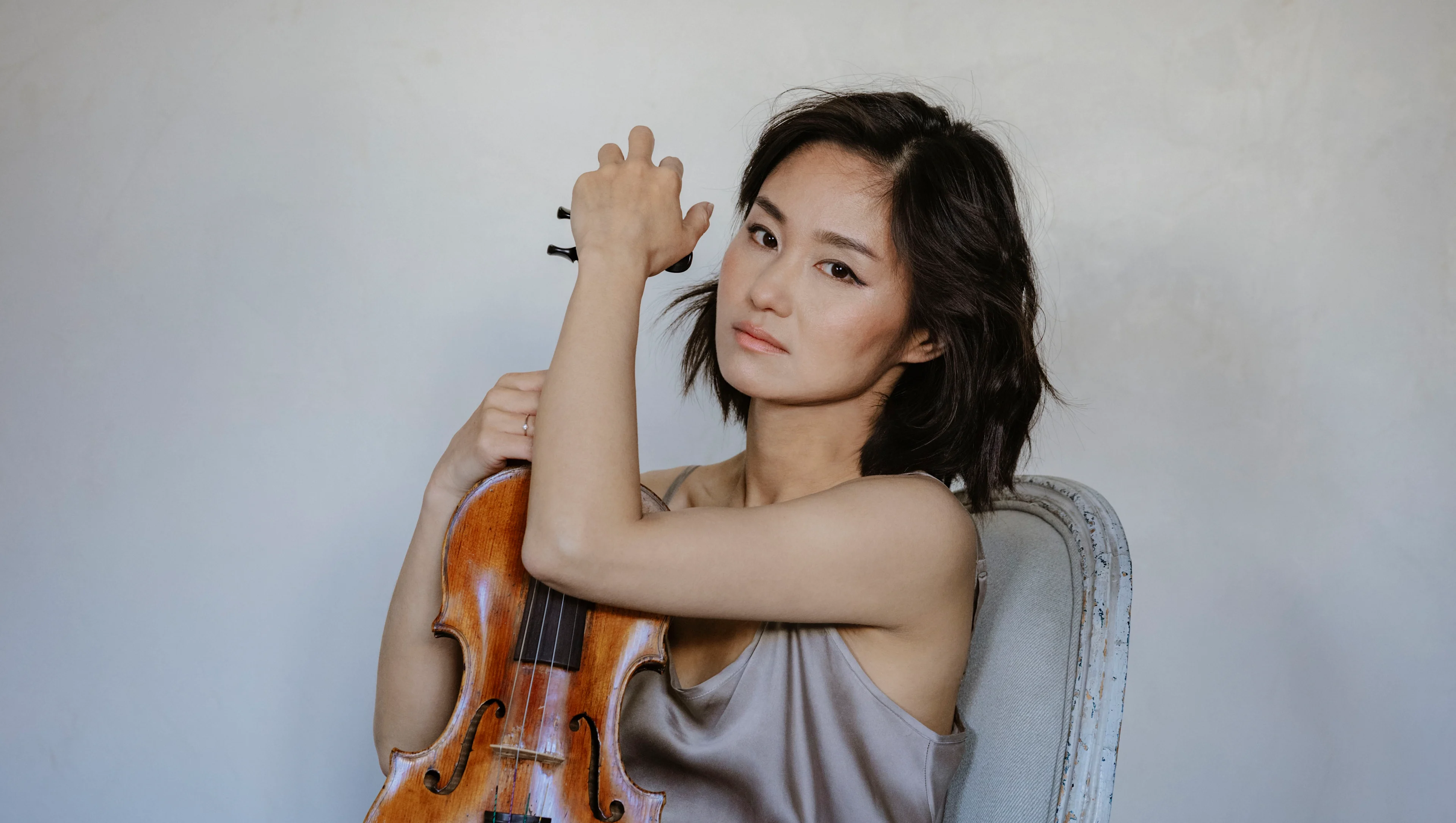
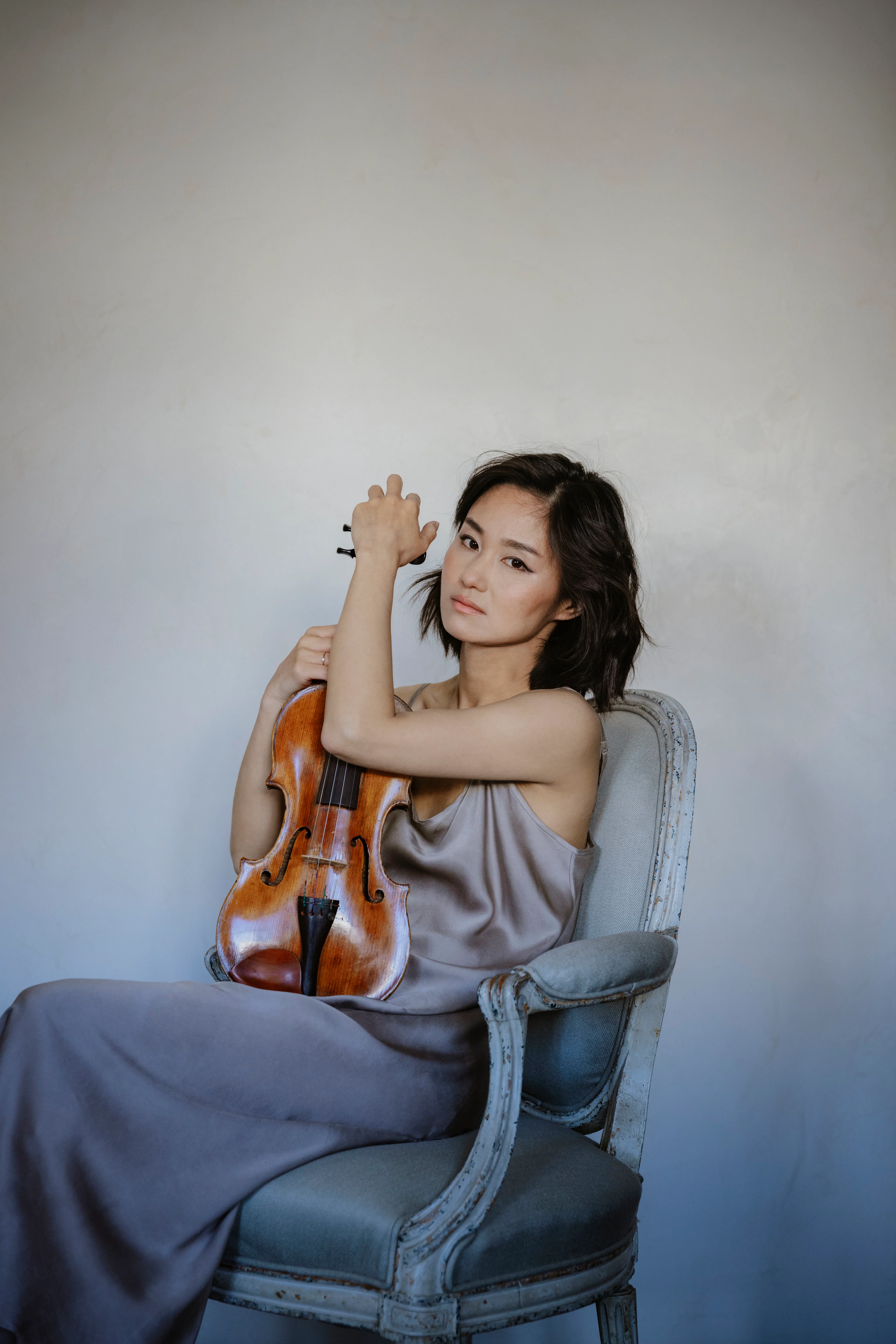
Sayaka Shoji
Overview
Before concert halls, before the economy of performance, music began as ritual. A passage between worlds. A gesture addressed not only to an audience, but to the invisible.
In an era marked by digital excess and accelerated production and data hoarding, the desire has returned for presence and essential artistic acts that unfold as rites: slow, embodied, and shared.
It is within this space that Olivier Berggruen and the Berggruen Arts & Culture cultivated works at the intersection of composition and music, architecture, philosophy, and visual art—creating rare conditions in which artists may step into transformation.
Sayaka Shoji’s practice belongs to this lineage. Her collaborations with Tadao Ando, Hiroshi Sugimoto, and Saburo Teshigawara, and her long‑standing dialogue with composers such as Toshio Hosokawa and Kalevi Aho, reveal a consistent orientation: toward music as invocation rather than display. Since the age of 16, when her international career began, she has pursued a path that resists separation between technique and spirit. She performs on the Recamier Stradivari.
At the center stands Hosokawa’s Extasis, composed for Sayaka Shoji between 2015 and 2016. For Hosokawa, the origin of music lies in shamanism—in the act of praying across realms, of singing toward what cannot be seen. He describes Shoji, alone on stage, as a miko: a ritual intermediary. The violin becomes an extension of her voice; sound becomes breath, brushstroke, calligraphy in motion. Extasis is the desire to step outside the self—to abandon ego, to descend into productive chaos, and to let sound pass from body to space to void.
From Bach’s Chaconne—an offering shaped by grief and devotion—to Bartók’s solitary, elemental language, this program unfolded as a rite of passage rather than a recital.
As Shoji reflects: “To connect these two worlds of visual art and music as one—to let them resonate together, and to create a new page in the history of art with the public. This is my dream. And there are very few people like M. Berggruen who can truly help make this possible.”
This performance at Palazzo Diedo is part of a longer trajectory developed with Arts and Patrons, leading toward future multidisciplinary commissions for the Naoshima Synesthesia Festival. A space where time can be reappropriated within music, architecture, landscape, ritual, and the presence of the audience.
This solo program traces a ceremonial arc:
- Toshio Hosokawa – Extasis, Kalevi Aho – ENOURA, from a newly commissioned work for violin and gagaku ensemble, to premiere at the Enoura Observatory in March 2028, Béla Bartók – Sonata for Solo Violin, J.S. Bach – Chaconne
Details
Fondamenta Diedo, Cannaregio 2386, 30121 Venezia
Sunday May 10, 2026, 7pm